

Can Prayer Heal Marriages? What It Requires
Can prayer heal marriages? Learn how prayer supports repentance, wise action, safety, and renewed connection through biblical, practical guidance toda...
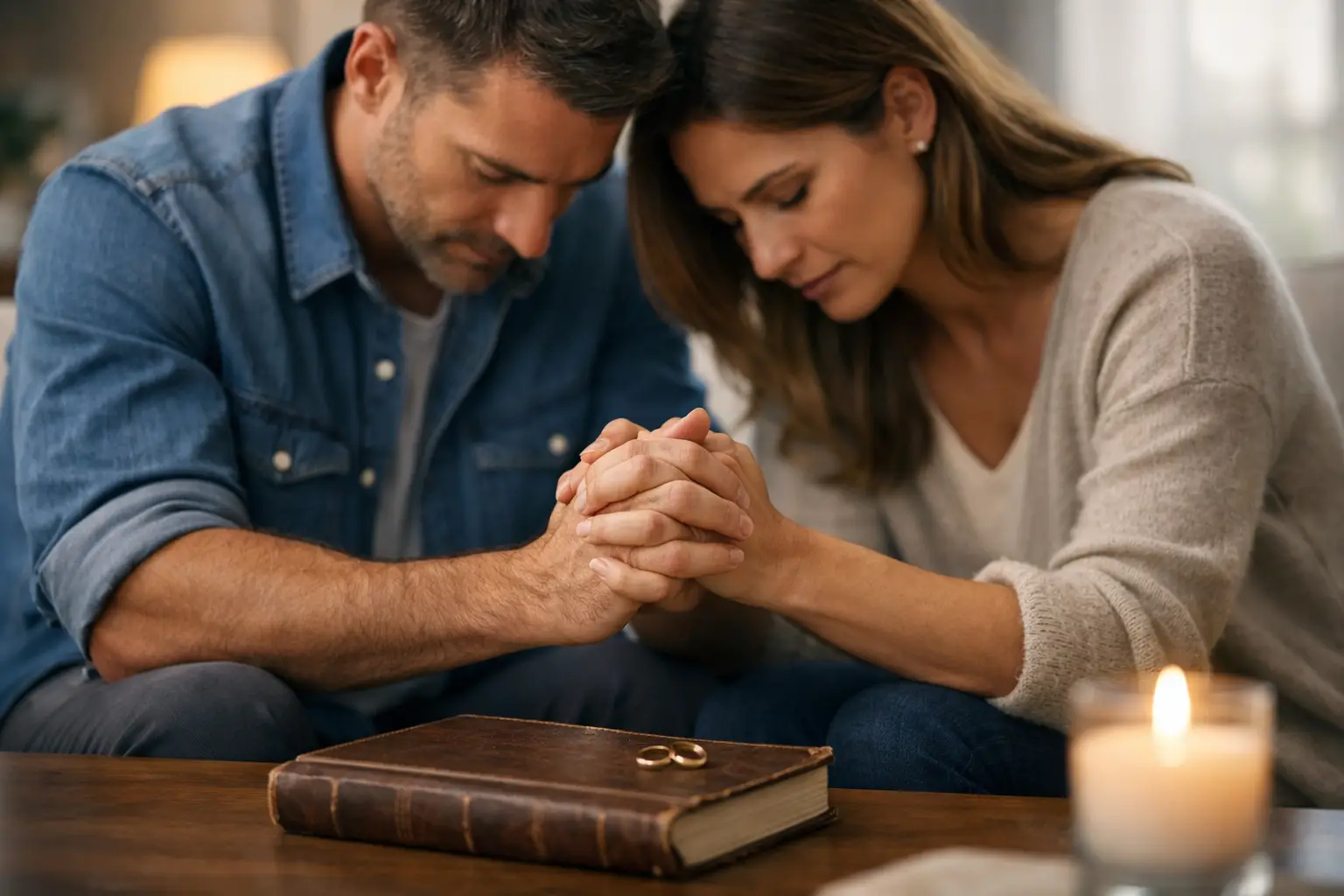
A marriage can grow painfully quiet long before anyone says the word divorce. Conversations become transactional. Old disappointments keep returning. One spouse feels unseen while the other feels continually criticized. In that place, many believers ask, can prayer heal marriages? Prayer can be a powerful place of healing, but it is not a shortcut around truth, repentance, safety, or the daily work of love.
God is not intimidated by what has happened in your home. He sees the betrayal, the resentment, the emotional distance, the financial stress, and the grief beneath the anger. He also sees what may still be possible when two people surrender their hearts to Him. A lifelong promise can be renewed, but renewal requires more than asking God to change your spouse. It begins with allowing Him to search you.
Can Prayer Heal Marriages? Yes, but Not by Itself
Prayer heals because it brings a marriage into the presence of the One who heals hearts. It makes room for conviction without condemnation, hope without denial, and wisdom for decisions that feel too heavy to carry alone. When a husband and wife pray honestly, they stop treating each other as the ultimate enemy and begin recognizing the spiritual, emotional, and relational battles affecting their covenant.
But prayer is not a spiritual phrase used to avoid hard conversations. A prayer for peace cannot replace an apology that has never been offered. A prayer for trust cannot erase repeated deception without changed behavior. A prayer for intimacy cannot restore connection if contempt, secrecy, or emotional neglect continue unchecked. Faith does not deny reality. Faith brings reality before God and responds to His truth.
Scripture calls believers to humility, forgiveness, faithfulness, and love. Those are not abstract ideals for a Sunday morning. They are practices that shape a home. Prayer gives couples the spiritual strength to live them when their feelings are weak.
What Prayer Can Change in a Marriage
Prayer changes the posture of the heart
A struggling marriage often becomes a courtroom. Each spouse gathers evidence, remembers every failure, and waits for the other person to admit guilt first. Prayer interrupts that posture. It invites each person to say, "Lord, show me where I have been defensive, harsh, controlling, withdrawn, fearful, or unwilling to forgive. Teach me to respond in a way that honors You."
This does not mean both spouses are equally responsible for every problem. Some wounds have clear causes, and some patterns are deeply one-sided. Yet each person can still ask God for wisdom, boundaries, courage, and a clean heart. That is where personal transformation begins.
Prayer makes room for repentance
Repentance is more than feeling sorry after an argument. It is a change of direction. A spouse who has lied begins telling the truth consistently. A spouse who has shut down learns to stay present in difficult conversations. A spouse who has used cruel words learns to speak with gentleness and restraint.
Prayer can expose what has been hidden and give strength for this kind of change. It can also help a couple distinguish between regret and genuine repentance. Regret says, "I hate the consequences." Repentance says, "I hate that I wounded you, and I am willing to do the work required to become trustworthy."
Prayer restores shared purpose
Marriage was never meant to be merely two people managing a house, a schedule, or a set of responsibilities. It is a covenant with the power to shape children, families, churches, and future generations. When couples pray together, they remember that their union carries purpose beyond the conflict of the moment.
Even a simple prayer can realign a couple: "Lord, help us build a home where Your peace is known. Teach us to love one another well. Let our marriage become a legacy of faithfulness for those who come after us." Shared prayer will not make every disagreement disappear, but it can keep a couple anchored to the reason they are fighting for restoration.
What Prayer Cannot Be Used to Excuse
Prayer must never be used to silence someone who is being harmed. If there is physical violence, sexual coercion, threats, intimidation, stalking, financial control, severe emotional abuse, or fear for personal safety, the first priority is protection. Seeking safety, involving trusted support, and contacting appropriate local authorities or professionals is not a failure of faith. It is wisdom.
Forgiveness does not require someone to remain in danger. Reconciliation requires more than forgiveness. It requires truth, demonstrated repentance, accountability, and safety over time. A person can release vengeance to God while maintaining firm boundaries. In some situations, separation may be necessary while counsel, treatment, and accountability take place.
Prayer also should not become a way to pressure a spouse into staying quiet about addiction, infidelity, untreated mental health concerns, or repeated betrayal. God works in the light. A marriage cannot heal around secrets that are continually protected.
A Prayer Practice for Couples Who Want to Rebuild
If your marriage is strained, do not wait until you feel spiritually polished to pray together. Begin small and be sincere. Choose a consistent time when neither of you is rushing out the door or preparing for sleep in exhaustion. Ten focused minutes can be more meaningful than an hour of distracted words.
Start by thanking God for one specific thing about your spouse or your marriage. This may feel difficult in a painful season, but gratitude softens the heart without pretending the pain is not real. Then each spouse can pray briefly for the other person's needs, not for God to make them easier to live with. Pray for strength, wisdom, healing, purity, peace, and renewed faith.
After prayer, make space for one honest question: "What is one way I can love you better this week?" Listen without defending yourself. You do not have to solve every issue in that moment. The goal is to build a new pattern of safety and responsiveness, one faithful response at a time.
Couples should also pray separately. Private prayer gives you room to bring unfiltered disappointment to God rather than unloading every emotion onto your spouse. Tell God the truth. Ask Him to heal the places in you that react from childhood wounds, past rejection, fear of abandonment, or a need to control. As He heals the individual, He strengthens the covenant.
Invite Wise Support Into the Process
Some marriages need more than a renewed prayer routine. They need help naming patterns that have become normal. A trusted pastor, Christian counselor, trained marriage mentor, or spiritually mature couple can provide perspective, accountability, and practical tools for communication and repair.
Wise support does not replace the work a couple must do at home. It helps them do that work with clarity. The right support will honor biblical truth while taking emotional health seriously. It will not rush a broken trust process, minimize pain, or tell a couple to simply try harder without addressing the roots of the struggle.
There is no shame in needing help. Strong marriages are not marriages that never face trouble. They are marriages where two people keep choosing humility, truth, and growth when trouble comes.
A restored marriage is rarely built in one dramatic prayer moment. More often, it is rebuilt through many surrendered moments: a truthful confession, a softened response, a boundary honored, a counseling appointment kept, a prayer whispered when hope feels thin. Keep bringing your covenant before God. Let Him heal what is wounded, strengthen what is weak, and teach you how to build a legacy that lasts.